Key Takeaway
A hog wire fence pairs a rigid welded steel wire panel with a wood frame, delivering an open, finished look at $60 to $70 per linear foot installed for the standard picture-framed build in the Sacramento area. The upgraded version with a redwood kickboard and hidden steel posts runs $65 to $75 per foot and lasts significantly longer. It works best for front yards, view lots, gardens, and large property boundaries where keeping sightlines open matters more than full privacy.
A hog wire fence is a rigid welded steel wire panel framed in wood, chosen when you want an affordable option that looks finished and keeps your views open instead of walling them off. In the Sacramento area, expect $60 to $70 per linear foot installed for the standard picture-framed build, and $65 to $75 per linear foot with a redwood kickboard. If you’re comparing fence options before you start getting estimates, this is the one people land on when they want security without giving up the view. Total footage, terrain, layout, and the materials you choose all move the number within those ranges.
What Is a Hog Wire Fence?
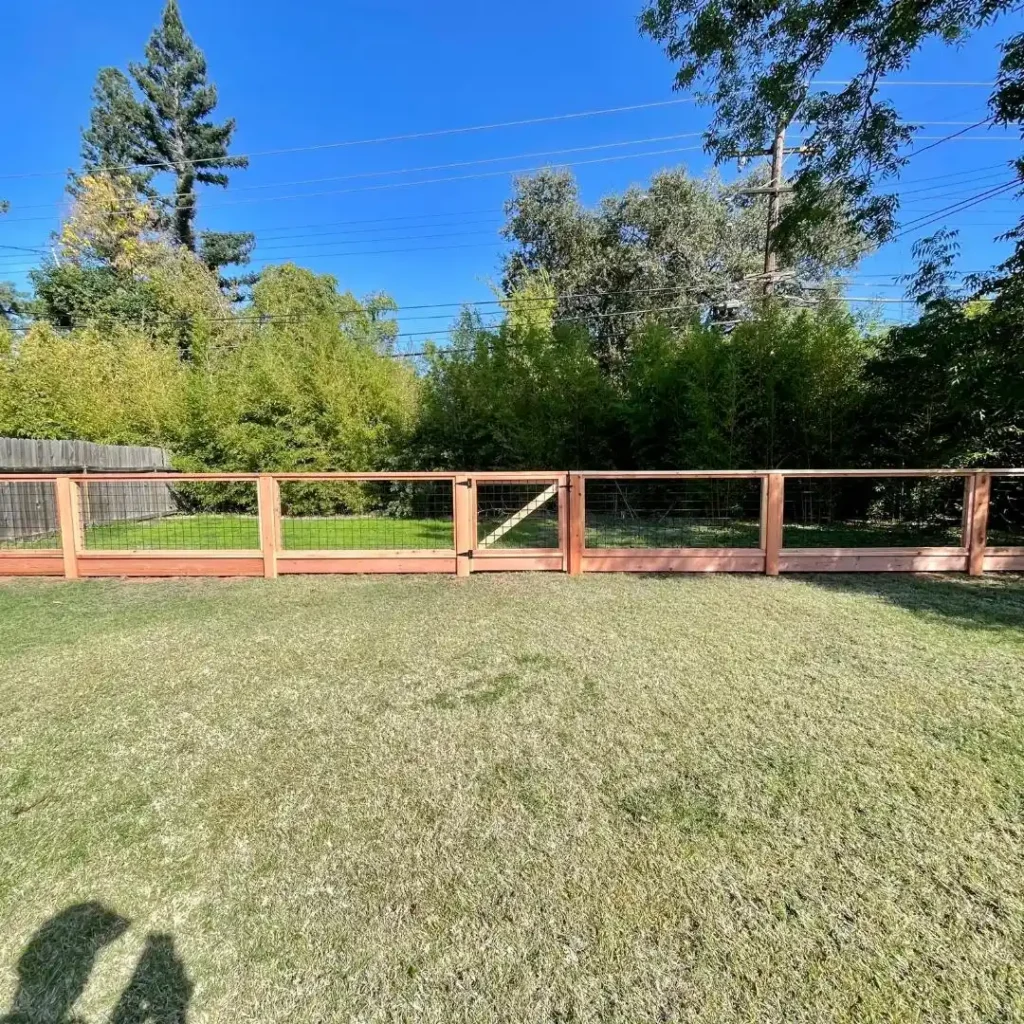
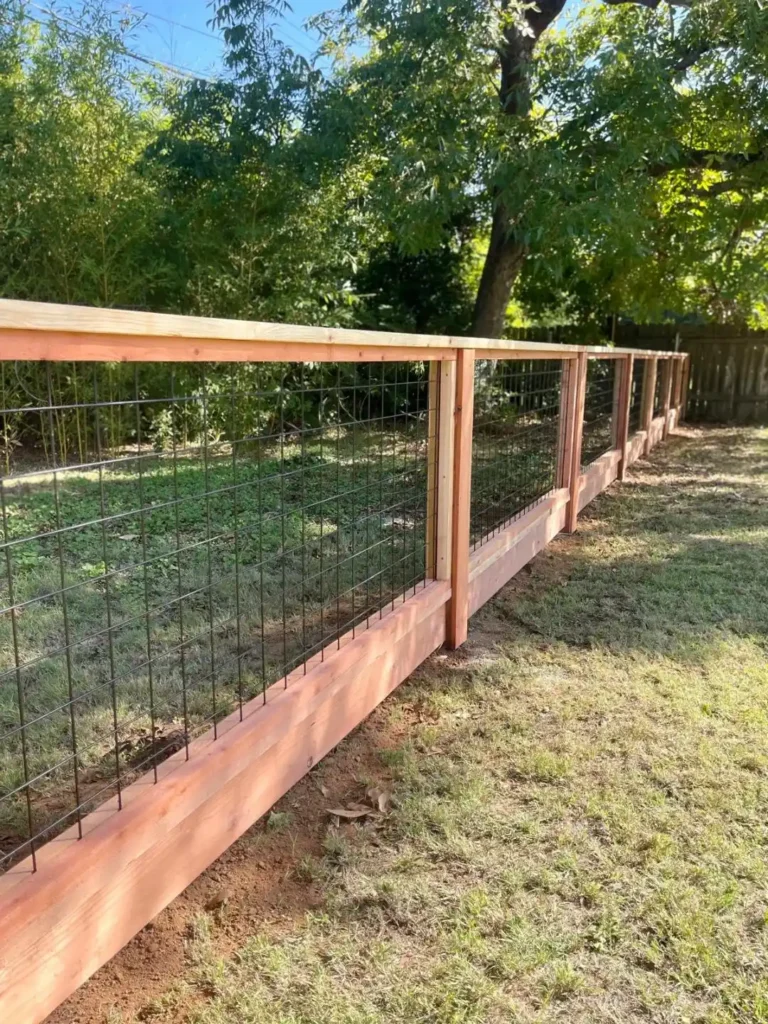
Hog wire fence, also called box wire, welded wire, wood-and-wire, or hog panel, pairs a wood frame with rigid welded steel hog wire panels set inside it. It’s not the loose roll mesh you unspool and stretch; the metal panel is stiff and stays flat between the frame members. The style started on farms, containing pigs, goats, and other livestock, and moved into modern residential design because it reads clean and open. That same open shape is what draws homeowners to it today. Two details are consistent across almost every hog wire fence we build:
- 2″ x 4″ mesh spacing. Small enough to keep kids and dogs in, open enough that the fence still reads as see-through.
- A cap on top. A 2×4 or 2×6 laid flat across the top of the frame. It finishes the fence visually and protects the top edge from weather.
Black or Galvanized Silver Hog Wire?
Both are common, and it’s a preference call, not a right-or-wrong one. This is one of the first material options homeowners weigh when they pick a hog wire fence.
- Black hog wire is the premium look. Dark panels recede, so from the street the wood frame reads as the fence and the wire nearly disappears. Most front-yard and view-lot customers pick it.
- Galvanized silver hog wire costs a little less and reads brighter and more agricultural, often exactly right on a farmhouse-style home or garden enclosure.
Either way, the wood frame is what you’ll be maintaining, not the metal panel. The wire itself is built to last with little attention.
The Two Ways We Build a Hog Wire Fence
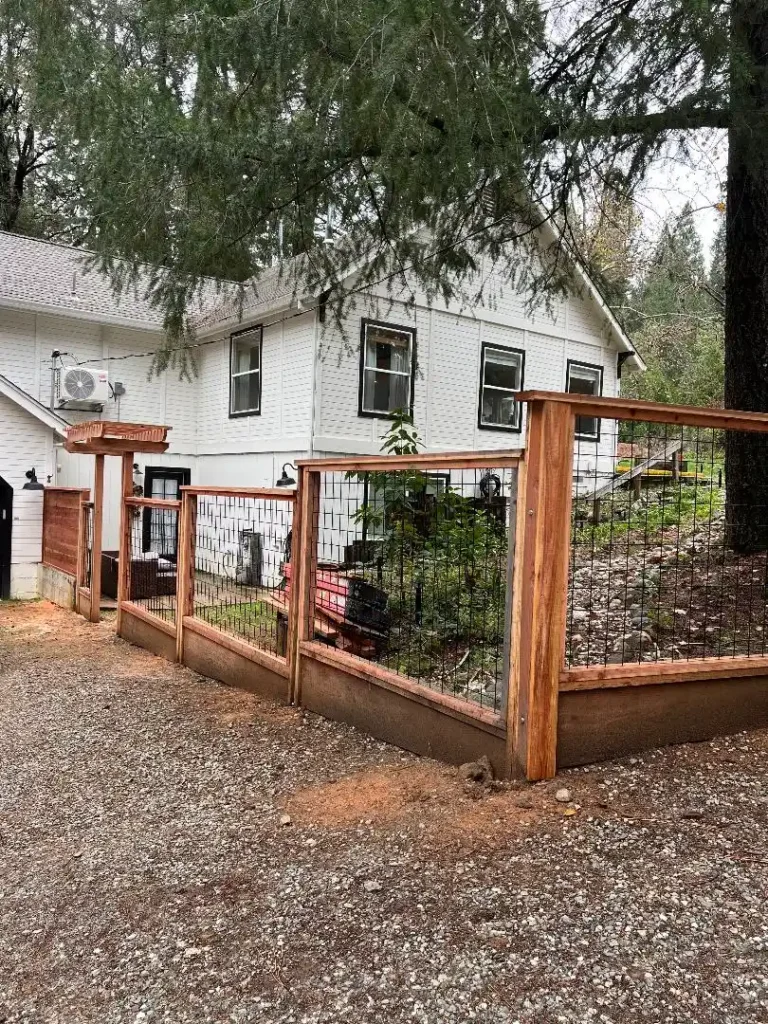
The differences show up in both the look and the cost. Here’s how the two builds compare before we get into hog wire fence installation details.
| Build style | How it goes together | Best for | Installed cost |
|---|---|---|---|
| Picture-framed panel (least expensive) | Panel sandwiched between 2x4s on both faces, with a 2×4 or 2×6 cap on top | Short runs, gardens, courtyards, budget-conscious projects | $60–$70/ft |
| Kickboard + hidden steel posts (upgraded) | Same framed panel sitting on a 2×8 redwood kickboard, built on hidden steel posts | Front yards, dog owners, uneven ground, long-term ownership | $65–$75/ft |
Option 1: The Picture-Framed Build
The wire panel gets sandwiched between 2x4s on both faces, so every edge is captured in wood. Framed panels look finished from both sides instead of showing a raw panel edge, which matters in a good neighbor fence situation where both sides face someone. This is the least expensive way to build a real hog wire fence, and it’s an affordable choice for short runs, gardens, courtyards, and budget-conscious projects. The materials list is simple, which keeps the labor and material costs down too.
Option 2: Redwood Kickboard and Hidden Steel Posts

The upgraded version keeps the same framed panel but changes what it sits on: a 2×8 redwood kickboard along the bottom, and hidden steel posts (galvanized steel wrapped in redwood, so they still look like wood 4x4s). These are our Bolt-Up Hidden Steel Posts, and they give the fence enhanced durability with reduced maintenance over the years. Both changes address where these fences actually fail.
- The kickboard closes the bottom. On the sloping ground common in Auburn, El Dorado Hills, and Loomis, a framed panel leaves a gap at every low spot. A 2×8 fills them, stops small dogs from slipping under, and keeps the wire panel off the dirt.
- Hidden steel posts remove the failure point. Wood posts rot at grade. Roughly 99% of the fences we’re called to repair failed at the post, not the panels. A steel metal frame doesn’t rot or feed termites, and the fence lasts far longer.
If you plan to be in the house more than five years, this is the version we recommend.
Hog Wire Fence Cost per Linear Foot
In the Sacramento region, plan on $60 to $70 per linear foot installed for the standard picture-framed build and $65 to $75 per foot with the redwood kickboard and hidden steel posts. What moves your total project cost: total footage, terrain and slope, gates, corners and layout, the kickboard, the hidden steel posts, your finish choice, and how easy the ground is to dig. National cost guides show a much wider $7 to $40 per foot range, but that’s because they mix rolled farm wire, prebuilt panels, and custom framed builds into one number, which makes it close to useless for planning a real residential fence. Where permits are required, they typically run around $50 to $200. Materials and labor both factor into the hog wire fence cost, and our pricing is flat with zero hidden fees. A firm number depends on a site evaluation and written proposal. The Fence Price Calculator is a good research-stage starting point for cost.
Where Hog Wire Fence Installation Works Best (and Where It Doesn’t)

Hog wire fencing works best when visibility matters. Front yards where you don’t need privacy, view lots, gardens (the mesh doubles as a trellis for climbing plants), courtyards, a backyard dog run with the small-dog kickboard caveat, farmhouse and modern homes, and large property boundaries or livestock containment all suit it. On acreage, it defines a boundary while keeping sightlines open across the area, and it gives animals room to roam without losing the view.
It’s not the right call for full privacy, very small pets without a kickboard or tighter mesh, pool safety without a code review, fire-prone properties attached to the home without planned material transitions, or HOAs that restrict open or wire fencing. If security and full screening are the priority, a solid wood or vinyl fence usually serves a property better. For strictly utilitarian containment, chain link is the more basic option, though it doesn’t carry the finished look of a framed hog wire fence. Taller fences and steep, rocky ground can also call for specialized equipment and extra site preparation, which we account for on site.
Local Rules to Check Before You Build
In Rocklin, residential fence height is limited to 6 feet in side and rear yards and 30 inches in front yards. A building permit may not be required for many standard fences, but zoning, HOA, and sight-distance rules still apply. Unincorporated Placer County has different front-setback rules with exceptions for open-style fencing, so check locally depending on where your property sits. Always call 811 (Underground Service Alert) before your crew brings tools to the property and digs post holes, which avoids extensive excavation problems near buried utilities. If the fence is near a pool, verify the design with your local building department, since California Health and Safety Code §115922 governs pool barriers. Our Fence Ordinance Quick Links are a good place to start.
Why Professional Fence Installation Matters
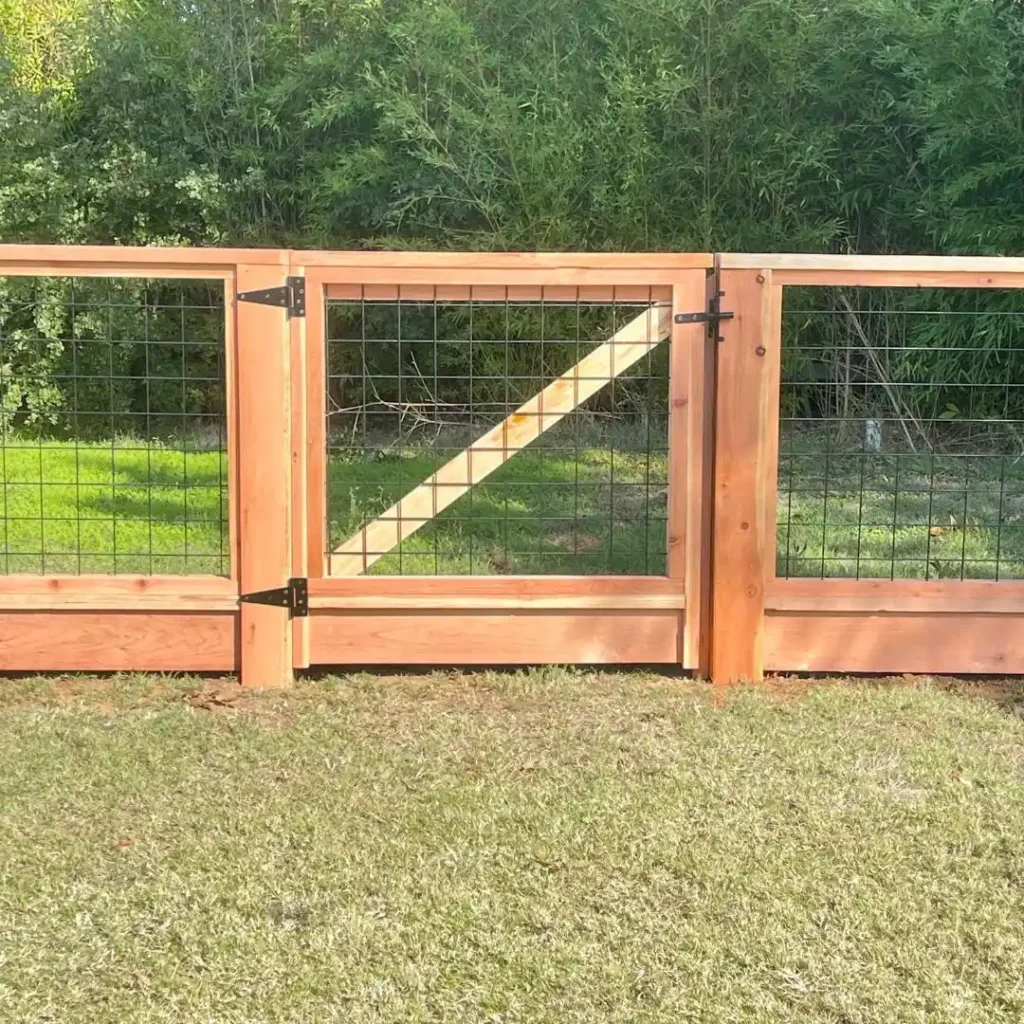
The installation is what separates a hog wire fence that looks sharp for years from one that sags at year two. Straight wire panels, a clean frame, a closed bottom, aligned posts, and gates that actually fit all come down to the crew doing the work, the tools they bring, and the care they take on your property. Gate installation in particular needs a square, plumb opening or the latch never lines up. We’re licensed, bonded, and insured (CSLB License #979657), and every hog wire fence installation is handled by background-checked W-2 employees, not subcontractors. That local expertise means we know how environmental conditions and neighbors’ shared lines factor into a clean build. Pricing is flat with zero hidden fees, and the job isn’t finished until you give the thumbs up. That’s the written guarantee. Dominic started this company after being burned by contractors who wouldn’t answer the phone or clean up, so those basics aren’t extras here.
Is a hog wire fence cheaper than a wood fence?
The cost runs comparable to or slightly above a basic wood fence, depending on the frame and posts. You’re paying for the open look and the durable steel wire panel, not just boards, so weigh it on value rather than the lowest sticker. If you search Google for a single price, remember most numbers you find lump different builds together.
What are the disadvantages of a hog wire fence?
It doesn’t give you full privacy or heavy security, and the open mesh can let very small pests through unless you add a kickboard or tighter spacing at the bottom. Most minor issues like that are easy to plan around before we build.
How much does 1,700 feet of hog wire fence cost?
A large run scales roughly with the per-foot number, but long agricultural stretches, added gates, and uneven terrain change the math. Get a site-specific quote before you budget it.
What gauge of hog wire is best?
A heavier wire gauge (lower number) gives more rigidity and a longer life. Weighing the advantages of one gauge against another comes down to how much protection and function you need, and how many factors like slope and traffic the fence will face. We spec metal panels built to stay flat in the frame rather than the lightest materials available.
Get a Free Fence Estimate
Want to talk through whether the standard framed build or the kickboard and hidden steel post upgrade fits your yard, budget, and timeline? It’s an easy thing to decide once you’ve walked the line with an estimator. Ready for a fence you’ll actually love? Let’s talk. Call us or book online for your hog wire fence installation. We serve homeowners across Sacramento, Placer, El Dorado, Yolo, Yuba, and Nevada counties from three local offices.