
Key Takeaway
A solar electric fence uses a solar panel to charge a battery, which powers a low-impedance energizer that sends brief high-voltage pulses through conductive wire, keeping the fence live day and night without grid power. Modern energizers produce more than 5,000 volts at under 300 milliamps, with each pulse lasting just 1/300 of a second. Solar is the strongest choice for remote paddocks, rotational grazing, and off-grid lines where trenching utility power is impractical. It works as a psychological barrier, not a physical one, so a solid perimeter fence remains essential.
A solar electric fence is a containment system where a solar panel recharges a battery, the battery powers a low-impedance energizer, and the energizer sends brief high-voltage, low-amperage pulses through conductive wire. The solar panel doesn’t power the fence directly. It keeps the battery topped off so the fence runs day and night. If you’re weighing solar for a pasture, paddock, vegetable garden, or a stretch of remote acreage, understand this up front: a solar fence is a complete system, not a fence with a panel bolted on. Every product in it has to match the job.
How Does a Solar Powered Electric Fence Work?
The circuit runs in a loop. Sunlight hits the solar panel, which generates electricity for roughly 8 to 14 hours a day depending on season and siting. That energy charges a rechargeable battery. The battery feeds the energizer, which builds and releases a pulse down the fence wire. When an animal touches the hot wire while standing on soil, it completes the circuit, and the pulse travels through the animal, into the ground, back to the ground rods, and home to the energizer.
Because the battery does the work, the fence stays live overnight and through a stretch of gray weather. Output is pulsed rather than continuous, so operation draws very little power. Virginia Cooperative Extension describes modern energizers as producing more than 5,000 volts at less than 300 milliamps, with each pulse lasting no more than about 1/300 of a second. That short, regulated pulse is what makes the fence a deterrent rather than a hazard. It is a form of psychological barrier, designed to teach. Animals learn to respect it. They aren’t physically stopped by it.
Solar Fence, Solar Gate Opener, or Electrified Security Fence?
Three different things get called “solar fencing,” and they aren’t interchangeable.
- Agricultural solar electric fence: an energized wire line designed to contain livestock, control pets, or protect a garden or orchard from wildlife.
- Solar gate opener: a solar powered unit that moves a gate on an ordinary, non-electrified fence line. Nothing about the fence carries current.
- Electrified commercial security fence: a specialized, heavily regulated product with its own legal framework, generally restricted to specific commercial and industrial settings.
All three share solar’s core advantages: they run without mains electricity, a grid outage doesn’t shut them down, and they save the expense of trenching power to a remote line.
When Does Solar Powered Fencing Make Sense, and When Doesn’t It?
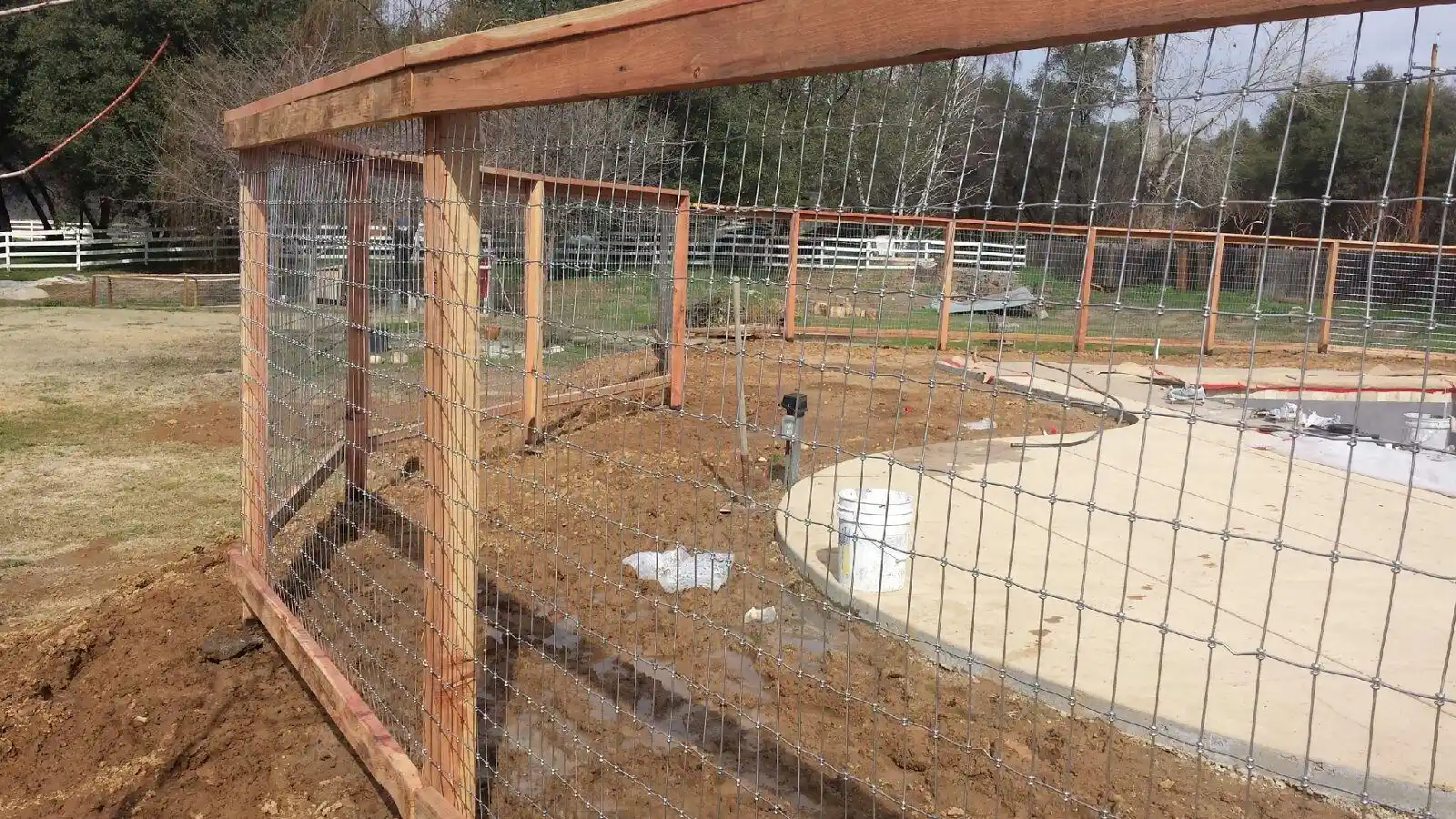
Solar is the best option anywhere utility service is unavailable. It is not automatically the best energizer type. Where a reliable outlet is nearby, a plug-in energizer usually provides more output per dollar of equipment with less maintenance.
| Solar is a strong fit | Plug-in is usually better |
|---|---|
| Remote paddocks with no electrical service | A reliable outlet is already close to the fence line |
| Rotational grazing and portable interior lines | Very long, heavily vegetated, high-load systems |
| Rented or seasonal grazing ground | Deep shade or poor sun exposure at the panel site |
| Orchards, gardens, and wildlife exclusion | Heavy predator deterrence needing high output |
| Anywhere trenching utility power is impractical | Any site needing a physical barrier if equipment fails |
Size the system precisely to your local climate averages, not a best-case sunny week. Panel output also depends on latitude and season, so a panel located under tree canopy or on a shaded north slope will underperform all year. Operating cost is where solar wins outright, since the money you save by skipping a utility trench rarely gets beaten.
Solar Panel, Battery, and Energizer: What’s in a Complete Solar Fence System?
- Listed low-impedance energizer that holds pulse strength when vegetation touches the wire
- Correctly sized weatherproof solar panel to recharge the battery daily
- Rechargeable battery and charge control. Lithium generally lasts longer and handles harsh weather better than lead-acid
- Conductive wire, polywire, tape, or netting matched to the animal, the purpose, and how often you’ll move the line
- Insulators and insulated lead-out cable to keep current on the fence and off the posts
- Galvanized ground rods or a hot-and-ground return design
- Cutoff switch, fence tester, warning signs, and safe gate crossings
An integrated all-in-one product is convenient and genuinely portable. A separate solar panel, battery, and energizer assembly costs more to buy and provides more output with room to grow. Some panels, like bifacial modules, increase energy capture by as much as 10%, which matters on a marginal site.
How Many Joules Do You Need? Sizing an Electric Fence Energizer

Two numbers matter, and they’re not the same. Volts are the pressure the animal feels. Output joules are the energy available to push that pressure through load: wet grass, long wire runs, dry soil, a heavy coat of wool.
- Total energized wire, not perimeter length. Multiply the run by the number of hot strands.
- Animal type and coat thickness
- Vegetation expected to contact the line through the season
- Soil conductivity where you live
- Any expansion you’re likely to add in the next few years
Advertised “powers up to X miles” claims on product listings, including the ones you’ll read on Amazon and other marketplaces, assume clean, single-strand, ideal conditions, so treat them with suspicion. A common rule of thumb is roughly one mile of fence wire per output joule, useful as a first planning estimate and nothing more. Virginia Extension found most integrated portable solar units produce under 1 output joule, with larger integrated models near 2. Compact units commonly cover a few kilometers of wire or enclose around 50 acres in favorable conditions. For solar panel sizing, UC guidance suggests at least 10 watts of panel capacity per joule of output, and a 6 to 10 watt panel will typically maintain a 0.3 to 0.5 joule energizer. Review the manufacturer’s specification before you buy and let it override any rule of thumb.
Grounding: Why Most Solar Fence Failures Start Here
The pulse has to return through the soil to the ground rods to complete the circuit. A perfect energizer on a weak ground field produces a weak fence, and inadequate grounding causes a large share of electric fence failures.
UC guidance offers a sensible first step: at least three 6-foot galvanized rods spaced 10 feet apart, driven into moist earth where possible, plus roughly one added rod every 1,500 feet on longer systems. A competing rule of thumb calls for about 3 feet of ground rod per output joule. Both are planning estimates. Your energizer manual and your actual soil decide.
Dry, rocky, sandy, or baked summer ground conducts poorly. Western properties, including those of us with long dry Sacramento-region summers, often need an alternating hot-and-ground wire design rather than relying on soil moisture. Use compatible metals throughout, since mixed metals corrode and choke the connection. Never connect two energizers to the same fence.
Farm Animals, Pets, and Wildlife: What Changes by Species
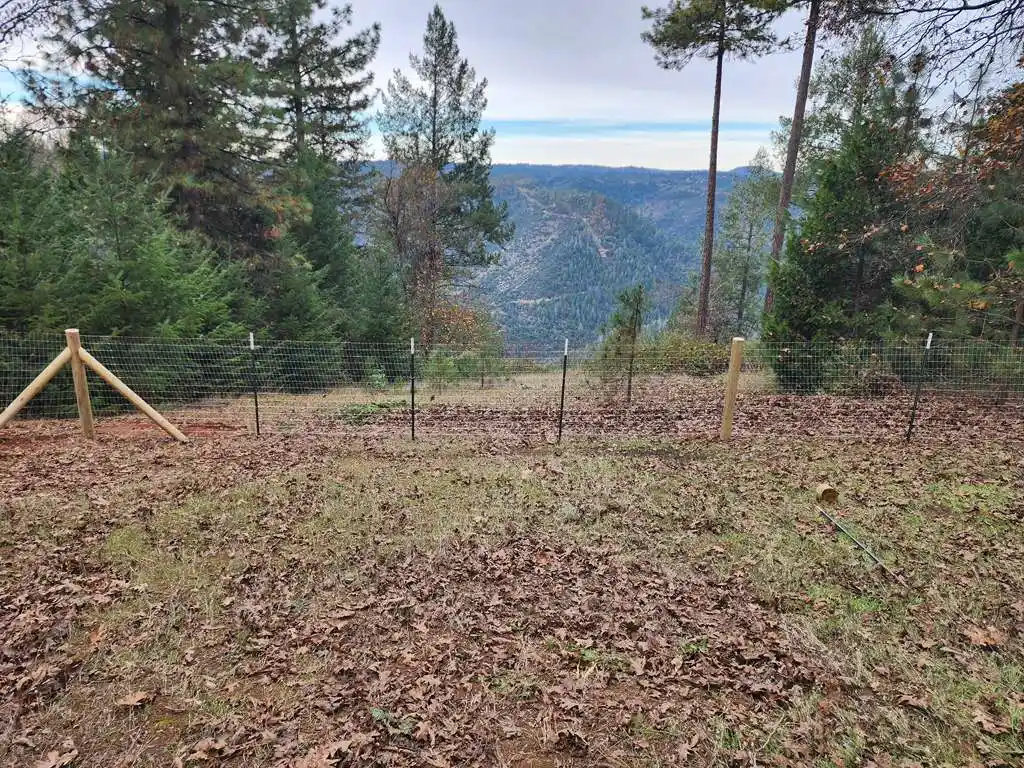
| Animal or use | Strand consideration | Voltage planning range |
|---|---|---|
| Cattle | Fewer strands, set at chest and nose height | ~2,000 V normally (UC) |
| Horses | Visible wire or tape, spaced so legs can’t pass through | ~2,000 to 4,000 V (UC) |
| Sheep and goats | More strands or netting; wool insulates heavily | ~4,000 V (UC), some guidance targets 5,000 V |
| Pigs and poultry, chickens included | Low strands near ground level | ~2,000 to 4,000 V (UC) |
| Dogs and other pets | Low strands added to an existing physical fence | Follow the product specification |
| Garden and orchard wildlife | Multiple closely spaced strands; high output for predators | Higher end of the range |
No single voltage fits every property. Wool, hair, hoof condition, soil moisture, and strand spacing all move the voltage you actually achieve at the wire. For dogs, an electrified strand is an addition to a physical fence, never a replacement for one. Livestock and pets both have to be trained to the fence in a controlled setting before you rely on it to hold them.
Interior Solar Fence vs. Permanent Perimeter Fence
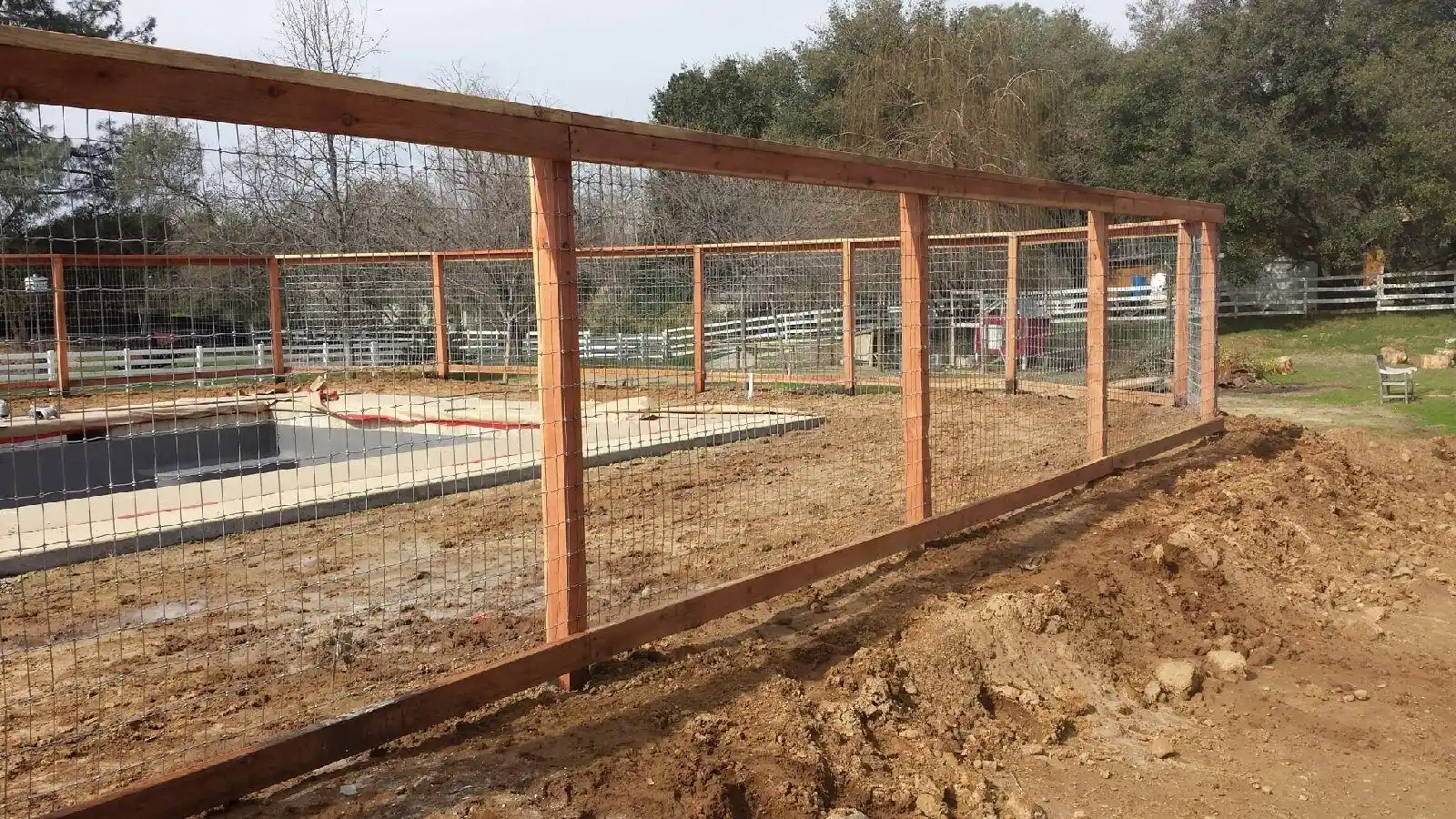
An electric line is a psychological barrier. Once power is lost, a portable line often won’t stop a determined or untrained animal. UC ANR draws a clear line between interior fencing and the permanent perimeter, and the perimeter is the backup when an interior line fails.
Most California counties are closed range, which puts containment responsibility on the livestock owner. The state’s “lawful fence” standard calls for a good, strong, substantial fence sufficient to keep animals in or out. Solar cross-fencing is an affordable management tool that gives you real flexibility for rotational grazing. It is not a substitute for a robust physical perimeter, especially where animals could reach a road or a neighbor’s property. That permanent perimeter is the part we build.
Solar Fence Installation: A Planning Checklist

- Confirm zoning and permit requirements before you buy anything or add a kit to your cart.
- Call 811, Underground Service Alert (USA), before you dig a single post hole.
- Map the line and calculate total energized wire, strands included.
- Price out and order matched components: energizer, battery, solar panel, wire.
- Site the solar panel in full sun, clear of shade and out of reach of livestock.
- Set posts, insulators, and wire, then install the grounding field.
- Review the controller manual and connect everything to its instructions.
- Charge the battery as directed before energizing.
- Test output at the energizer and again at the far end with a fence tester.
- Train the animals before you depend on the fence.
Basic hand tools are enough for a simple portable line. Grounding, permitting, and permanent perimeter installation are where DIY projects usually come apart.
Safety, Codes, and Legal Requirements
Rules vary widely by city and county. Use only a listed, standards-compliant intermittent controller, never a homemade unit, which UC guidance specifically warns against. OSHA’s list of Nationally Recognized Testing Laboratory standards includes UL 69: Electric Fence Controllers. Post warning signs, and make sure children and visitors know the fence is live.
California note (verify current requirements before you build): Food and Agricultural Code sections 17151 to 17152 require animal-control electric fences to use a controller meeting NFPA/NEC, IEC, or UL standards. Commercial electrified security fencing falls under Civil Code section 835, with warning signs at gates and at intervals no greater than 30 feet, placement behind a nonelectrified barrier at least 5 feet high, and temporary provisions currently set to sunset January 1, 2028. Sacramento County amended its zoning code on September 10, 2026, adding a 50-foot boundary trigger for agricultural electric fencing near nonqualifying zones. Review current rules with your city or county planning and building department, and use our Fence Ordinance Quick Links as a starting point.
On licensing, CSLB’s C-13 classification covers fencing work and C-10 covers electrical and photovoltaic work. Fantastic Fence is licensed, bonded, and insured, CSLB License #979657.
Maintenance and Troubleshooting a Weak Solar Fence

- Test energizer output with the fence wire disconnected to isolate the unit.
- Check battery charge and overall solar panel condition.
- Clean the panel and look for new shade or poor orientation.
- Test the grounding field.
- Walk the line for vegetation contact, broken wire, cracked insulators, and corroded connections.
- Test voltage at several points, including the far end.
- Confirm no second energizer is connected to the same circuit.
A charger that clicks steadily while the fence reads weak or dead is the classic short to ground or grounding failure. Low-impedance energizers tolerate vegetation better than older designs, but they don’t excuse clearing the line. Modern energizers are not weed burners and must never be used to burn vegetation off the wire. UC wildfire guidance recommends keeping fence lines clear of brush and grass, especially near structures. Check weekly during the growing season, and clear the line before fire season.
Frequently Asked Questions
Are solar powered electric fences any good?
Yes, when the energizer, battery, solar panel, and grounding are matched to the job. Reviews and field reports both point the same direction: they’re the practical choice for remote paddocks, rotational grazing, and any line where running utility power makes no sense. Where a reliable outlet is close, a plug-in energizer gives more output for less equipment.
What are the disadvantages of a solar electric fence?
The panel needs unobstructed sun, the battery eventually needs replacing, and compact all-in-one units are limited in output. One major disadvantage outweighs all of those: the fence stops working as a barrier the moment power fails, because there’s no physical strength in the wire itself.
How much does a solar electric fence cost?
Price depends on energizer output, panel and battery size, wire type, total length, terrain, and whether a permanent perimeter fence is part of the project. For the perimeter portion, try our fence price calculator or request a free estimate and we’ll give you flat pricing with zero hidden fees. Financing is available for Sacramento-region residents.
What is the lifespan of a solar electric fence?
Component by component. Panels typically outlast batteries by a wide margin, lithium batteries generally outlast lead-acid, and wire and insulators depend on weather exposure and upkeep. Regular voltage testing and connection checks extend all of it.
Is a Solar Electric Fence Right for Your Property?
Four questions settle it. Is the location genuinely off-grid? Is this an interior cross-fence or your true perimeter? Have you calculated total energized wire, not just perimeter length? Do you have a grounding plan that works in dry soil?
We build the durable agricultural and perimeter fencing a solar interior system depends on: wood, steel, chain link, and farm fencing across Sacramento, Placer, El Dorado, Yuba, Yolo, and Nevada counties. Flat pricing, background-checked W-2 employees, a written guarantee, and a full clean-up when we’re done. Licensed, bonded, and insured, CSLB License #979657. Share your property map with us and we’ll walk the line with you. Get a Free Fence Estimate: contact us by phone at the number for your area, or book online.