Key Takeaway
A stockade fence is a wood privacy fence built from vertical pickets fastened edge-to-edge to horizontal rails and posts, typically standing 6 to 8 feet tall. It delivers solid backyard privacy at a lower cost per linear foot than vinyl or composite alternatives. Wood movement is normal, so species, lumber grade, and post type determine how long the fence stays tight and upright.
A stockade fence is a wood privacy fence built from a single row of vertical pickets fastened edge-to-edge to horizontal rails and posts. The result is a solid, classic look that gives a backyard far more privacy than chain link, usually in the 6-to-8-foot range, and it stays one of the most affordable privacy options available.
Here’s the part most articles skip: the word “stockade” describes the look, not the build quality. Two estimates with that word on them can describe very different fences. Wood also moves with the seasons, so solid today isn’t the same as solid forever. Below are the specs that decide how long your fence lasts and how private it stays.
What does a stockade fence look like?
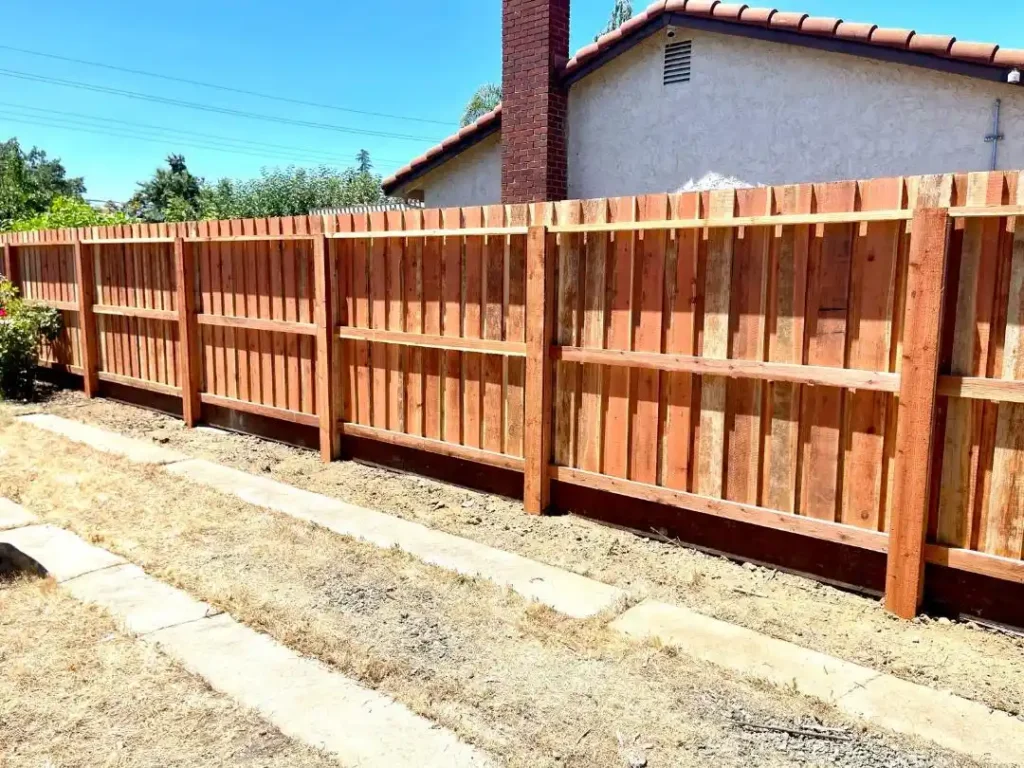
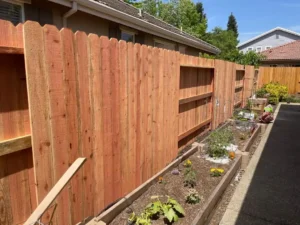
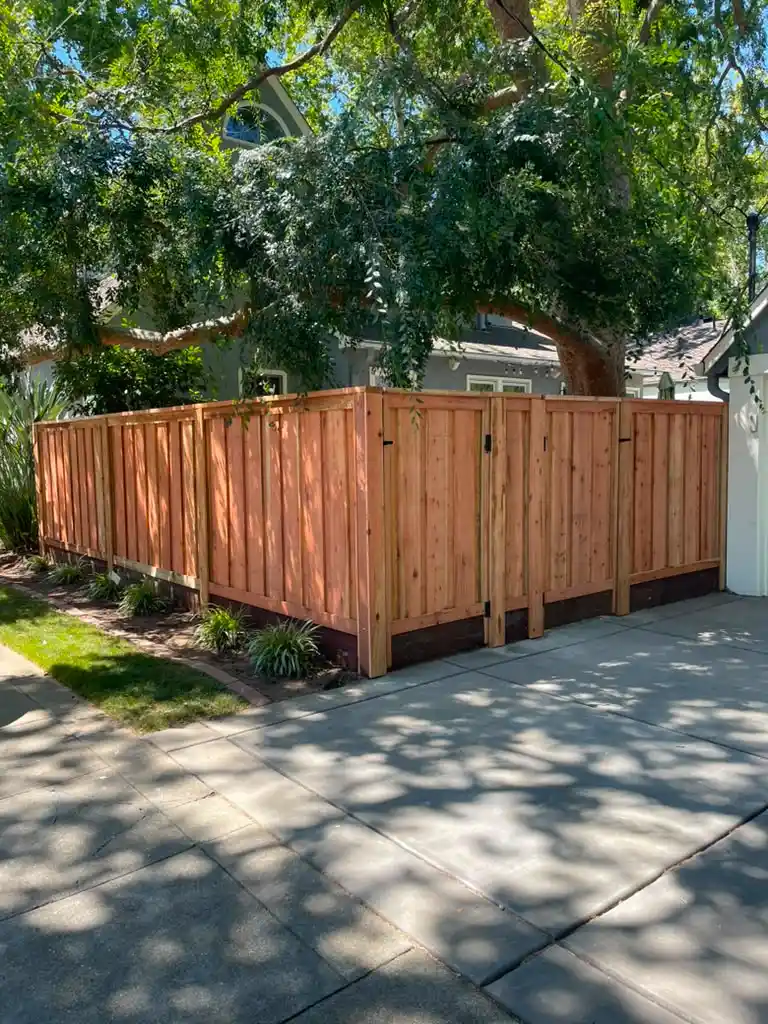
The anatomy is simple: one layer of vertical pickets fastened to two or three horizontal rails, carried by posts set in the ground. From the finished side you see boards and almost no daylight. Walk to the other side and the rails show, which is worth settling before anyone decides which way the fence faces.
The top profile isn’t standardized. Pointed, dog-ear, rounded, gothic, and flat-top pickets are all sold as stockade, and usage shifts by contractor and region, which is why the label alone is imprecise. The pointed version traces back to defensive stockades built from sharpened logs. Profile, height, and finish can all be customized to the aesthetic of your house.
Stockade vs. board-on-board, shadowbox, and good neighbor styles
“Privacy fence” is the broad category, and stockade is one construction style inside it. The real difference is how the boards sit relative to the rails. That one decision drives privacy years from now, what your neighbors see, and how the fence handles wind.
| Style | Board layout | Privacy after wood shrinks | Look from each side | Airflow |
|---|---|---|---|---|
| Stockade | Single row, set tight | Small seams can open | Rails show on one side | Low |
| Dog-ear | A top profile, often on stockade builds | Same as stockade | Rails show on one side | Low |
| Board-on-board | Overlapping, two layers | Best at hiding future seams | Similar both sides | Low |
| Shadowbox | Alternating sides of the rails | Partial sightlines by design | Similar both sides | High |
| Good neighbor | Comparable from both properties | Depends on the build | Balanced by design | Varies |
“Good neighbor fence” isn’t an automatic synonym for stockade. If future sightlines would bother you, explore board-on-board before you sign anything. Either option can be built from preassembled panels or stick-built board by board on site.
Benefits of a stockade fence: privacy, noise control, and classic beauty
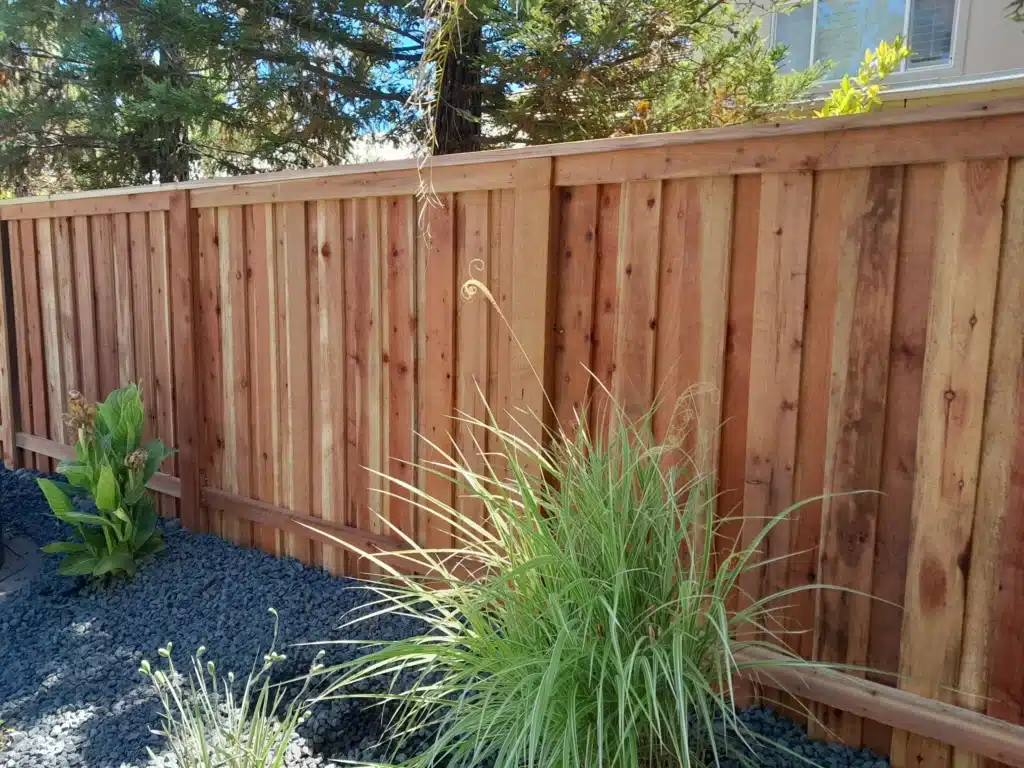
Start with the look. Natural wood has a warmth that manufactured materials chase and rarely catch, and you can finish it with stain or paint to match your siding and your landscaping. That beauty is real curb appeal, and it’s a big reason stockade remains a popular choice. Wood also costs less per linear foot than vinyl, and that affordability keeps it moving with homeowners and with businesses screening a yard or lot.
Practically, it’s a solid enclosure for kids and the family pup, a screen for a patio or garden, and a buffer against street noise. A solid wood fence dampens sound, so noise control is a genuine benefit, though it isn’t soundproof and it isn’t a high-security barrier. Individual boards and even whole panels can usually be swapped out, which keeps repairs affordable. For most families the payoff is simple: a backyard you can use in peace, without an audience.
The drawbacks homeowners should understand first
Wood in service continually changes moisture content and dimensions, as USDA research explains, and coatings slow that movement without stopping it. Tightly butted pickets can show narrow seams after a dry season. That’s normal, not a defect.
A single-layer build also shows the rails on one side, which some homeowners find ugly enough to matter. A solid face catches more wind than an open fence, putting real load on posts and gates. A wide driveway gate takes the worst of it, so gate framing and hinge quality deserve attention. Wood posts stay vulnerable at ground level, where moisture sits. Refinishing every two to three years is commonly cited, but follow your finish manufacturer’s instructions.
One more thing worth saying plainly: a tall solid wood fence is not automatically pool-code compliant.
Which wood is best for a stockade fence?
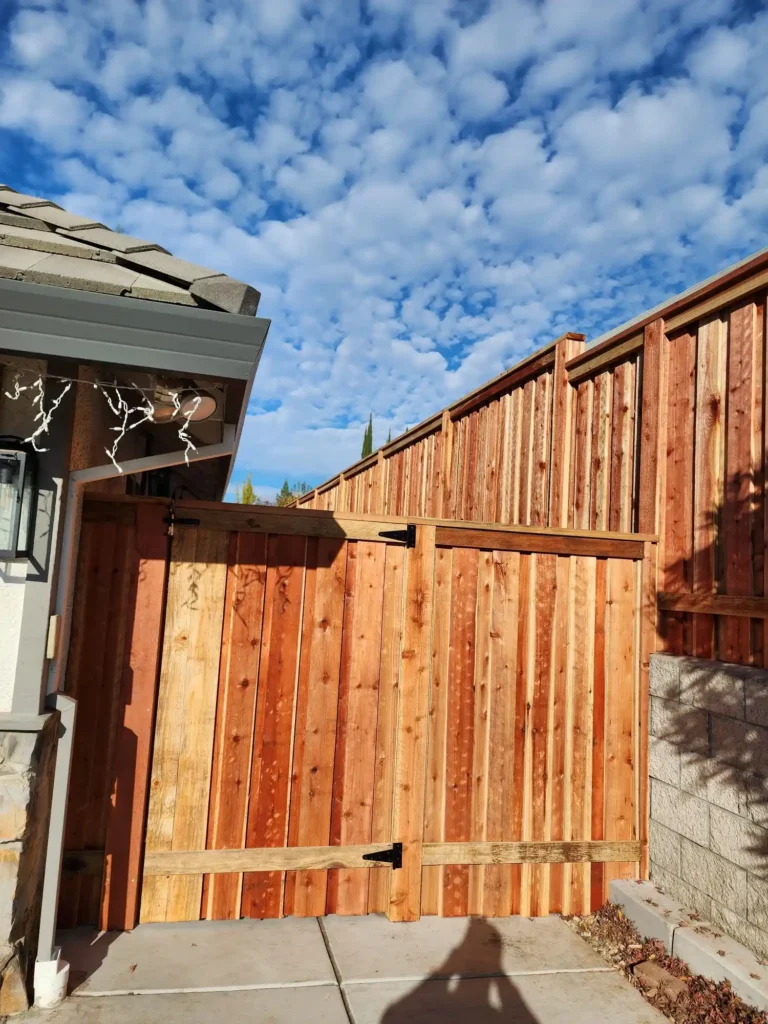
Cedar, redwood, spruce, cypress, and pressure treated pine all show up in stockade builds. The USDA Wood Handbook describes western redcedar heartwood as very resistant to decay. Old-growth redwood heartwood is also highly decay resistant, but second-growth heartwood ranges from low to moderate. A species name alone doesn’t prove a durable fence. Heartwood content, lumber grade, and exposure decide it. Pressure treated wood is protected, not immortal.
How to read a treated-lumber tag (AWPA UC3B vs. UC4A)
The American Wood Protection Association’s Use Category System rates material for where it actually sits. UC3B covers exterior above-ground use with uncoated surfaces, the category for unpainted pickets. UC4A covers general ground contact, where posts belong. Review the end tag yourself: it should identify AWPA U1, the use category, the preservative, the retention level, and an inspection-agency mark.
The EPA reports that virtually all residential uses of CCA were voluntarily canceled effective December 31, 2003. Modern residential options include ACQ and copper azole. AWPA standards update annually, so check current guidance.
What makes a quality stockade section: the specs that belong in writing
Ask for these in writing before anyone starts to break ground on your stockade section:
- Picket thickness and lumber grade
- Actual board spacing, not just “tight”
- Number and size of rails, plus the fastening method
- Post type and how posts are set
- Ground clearance and drainage (USDA notes rails generally need more decay protection than pickets)
- How slopes and grade changes are handled
- Gate framing, gate posts, and gate hardware
- Whether stain or paint is included
- Tear-out, haul-away, and cleanup
Skip anyone quoting universal post depths. Those follow the plan and the site.
Preassembled panels vs. board-by-board, and the DIY question
Panels speed up a straight, level run, but panel quality varies widely, so check picket thickness and rail size on anything quoted. Board-by-board handles slopes, odd lengths, and grade changes far better. One tip if you go DIY: mark post locations before digging, pack concrete around the posts, and pre-drill gate hardware. Long runs and gates are where DIY projects go sideways, which is where professional installation earns its keep.
Wood fence posts vs. Bolt-Up Hidden Steel Posts
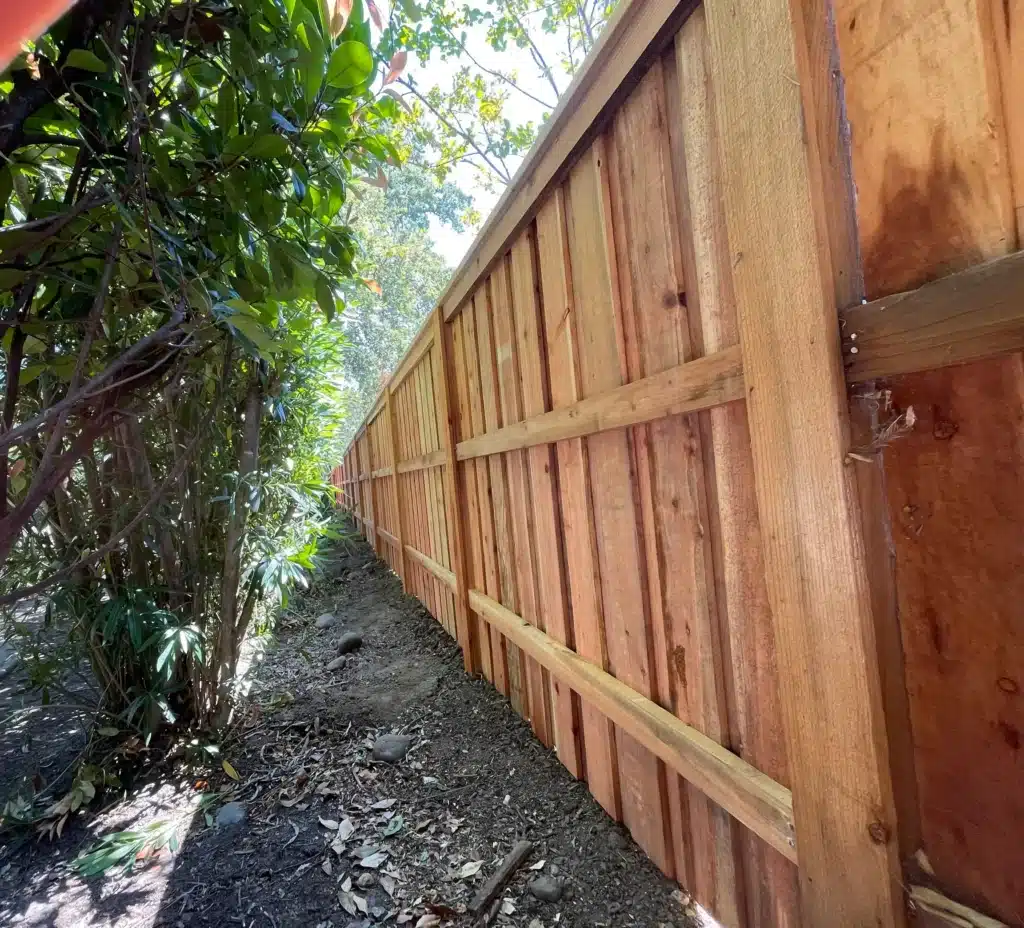
Posts carry the entire fence, and they’re the hardest component to replace later. Post failure, not picket failure, is what typically ends a wood fence. Bolt-Up Hidden Steel Posts are an affordable upgrade that adds strength and can extend the life of a stockade fence while keeping the clean wood look you wanted. The steel stays hidden inside the line, so nothing interrupts the natural grain.
Can a stockade fence be repaired, or does it need replacing?
Isolated warped or split boards, and sometimes whole panels, can usually be swapped if the rails and posts are sound. Leaning sections, movement at ground level, or widespread post decay mean post replacement or full replacement should be evaluated. Ten to twenty years is a common range, not a promise. Expect an on-site assessment rather than a call made from age alone, because repair, replace, and installation are all on the table. A dragging gate is often a post problem.
Before you install: Elk Grove permits, height limits, and neighbor notice

Figures are current as of September 2026. Confirm with the City of Elk Grove before you build.
- Height: Code generally allows 3 feet in required front yards and in visibility areas. Street-side yards: 3 feet if less than 5 feet from the back of the sidewalk, 7 feet if at least 5 feet back. Interior side and rear yards generally allow 7 feet, up to 8 feet with a City building permit.
- Permits: Non-pool fences not over 7 feet are generally permit-exempt. Exemption doesn’t waive zoning, placement, visibility, or HOA and CC&R rules.
- Shared fences: California Civil Code §841 presumes adjoining owners share equal benefit and cost, and requires 30 days’ prior written notice covering the problem, proposed solution, estimated cost, cost sharing, and timeline. Fairness exceptions apply.
- Digging: USA North 811 requires at least two working days’ notice, and CSLB guidance notes tickets are valid 28 calendar days.
- Pools: Health & Safety Code §115922 generally requires two of seven drowning-prevention features on permitted new or remodeled pools. Section §115923 enclosure specs include a 60-inch minimum height, no more than 2 inches of bottom clearance, no passage of a 4-inch sphere, and self-closing, self-latching gates opening away from the pool. Ask for a pool safety fence assessment.
- Contractors: CSLB requires a license when work needs a permit or totals $1,000 or more. A written contract is required over $500 and should list scope, materials, permits, cleanup, payment schedule, completion date, and license number.
What to ask for in your stockade fence estimate
Ask for style and exact spacing, species and grade, treatment category, panels or board by board, post type, gate details, finish, removal and cleanup, who pulls any permit, the written guarantee, and flat pricing.
Plenty of homeowners here have lived through the unreturned call and the yard left full of scrap. We were founded in 2011 because of exactly that. We’re licensed, bonded, and insured under CSLB License #979657, our crews are approximately 35 background-checked W-2 employees, and our flat pricing carries zero hidden fees. We clean up thoroughly because we’re guests on your property, and our written guarantee means the job isn’t finished until you give the thumbs up. Financing is available for Sacramento-region residents.
Try the Fence Price Calculator, or get a free fence estimate: call our Elk Grove office at 916-345-0142 or Book Online.
Frequently Asked Questions
How much should a stockade fence cost?
Price depends on length, height, species and grade, post type, gates, slope, and old fence removal. Use our Fence Price Calculator, or request a free fence estimate tied to your actual property.
What is the difference between a stockade fence and a picket fence?
Stockade sets pickets tight for privacy and typically stands 6 to 8 feet. A picket fence uses spaced boards, sits lower, and marks a boundary decoratively.
Will a stockade fence develop gaps over time?
Small seams are normal. Wood in service changes moisture content and dimensions, so tightly butted boards move a bit seasonally. Board-on-board hides those gaps better.
How long does a stockade fence last?
Commonly quoted at 10 to 20 years. Service life depends on heartwood content, the right AWPA category, wood versus steel posts, sprinkler exposure, fasteners, and finish upkeep.
Do I need a permit for a stockade fence in Elk Grove?
Non-pool fences not over 7 feet are generally exempt, and 8 feet in an interior side or rear yard needs a City building permit. Zoning, visibility, HOA, and pool-barrier rules still apply.